
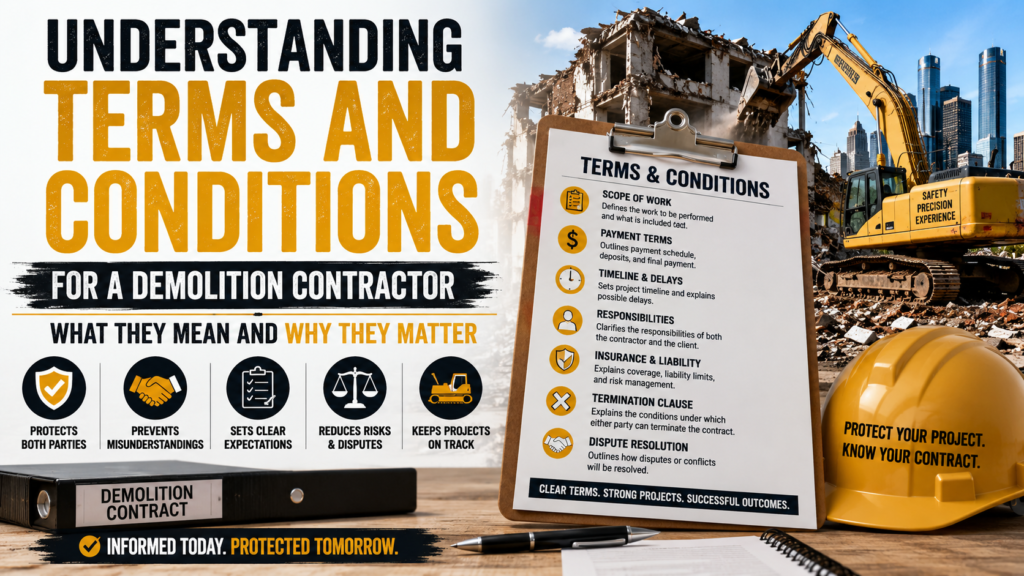
When a property owner or developer engages a demolition contractor in Detroit, the relationship is governed by a set of terms and conditions. These are the contractual and legal frameworks that define what the contractor will do, what the client is responsible for, how disputes are handled, and what protections each party has throughout the project. Understanding what Terms and Conditions JS Wrecking Co Detroit typically cover, why each element exists, and what it means for both parties is essential knowledge for anyone entering into a demolition agreement.
What Are Terms and Conditions in a Demolition Context?
Terms and conditions, in the context of a demolition contractor, are the legally binding provisions that accompany the contract for services. They establish the rules of engagement for the relationship between the contractor and the client, from the moment a quote is accepted through project completion, payment, and any post-project matters. They are distinct from the specific project scope, which describes what work will be done, and instead address the legal and operational framework under which that work is performed.
For a demolition contractor operating in Detroit, terms and conditions must reflect not only standard business practice but also the specific regulatory environment of the city and state, including Michigan’s licensing requirements, liability insurance standards, and the compliance obligations that apply to demolition work under state and federal law.
Key Elements Typically Found in Demolition Contractor Terms and Conditions
Scope of Work
The scope of work defines exactly what the contractor is agreeing to perform. In demolition contracts, this includes the specific structures or components to be demolished, the geographic boundaries of the work area, debris removal and disposal obligations, and any site preparation or grading included in the agreement. A precisely written scope of work protects both parties by establishing a clear baseline for what is and is not included, preventing disputes about whether certain tasks were expected or additional.
Permits and Regulatory Compliance
Terms and conditions specify which party bears responsibility for obtaining the necessary permits, licenses, and approvals required for the demolition work. In many demolition agreements, the contractor takes responsibility for pulling demolition permits from the City of Detroit BSEED, coordinating asbestos abatement inspections, and ensuring compliance with applicable state and federal regulations. The client’s obligations typically include providing accurate information about the property, disclosing known hazardous conditions, and ensuring the contractor has legal access to the site.
Insurance and Liability
Insurance requirements are among the most important provisions in demolition contractor terms and conditions. Michigan law establishes minimum liability insurance requirements for demolition contractors, with the specific minimums varying based on the type and scale of work. Terms and conditions will specify the contractor’s insurance coverage, require that proof of insurance be provided before work begins, and often include indemnification clauses that define how liability is allocated between the contractor and the client in the event of property damage, personal injury, or other adverse events.
Given the inherent physical risks of demolition work, including the operation of heavy equipment, work at height, dust generation, and handling of hazardous materials, comprehensive insurance coverage is not optional. It protects workers, neighboring property owners, and the client from the financial consequences of accidents that, despite all precautions, can and do occur on demolition sites.
Timeline and Completion
Terms and conditions address the project timeline, including start dates, completion milestones, and what happens if delays occur. In demolition work, delays can result from weather events, unforeseen site conditions such as undiscovered hazardous materials, permit processing times, utility disconnection delays, or other factors outside the contractor’s control. Well-drafted terms address these contingencies, identifying what constitutes a valid cause for schedule adjustment and how such adjustments are communicated and documented.
Change Orders
Construction and demolition projects frequently encounter conditions that were not anticipated during initial planning, requiring modifications to the scope, timeline, or approach. Terms and conditions establish the change order process, defining how changes to the scope of work are requested, evaluated, documented, and approved, and how they affect the project agreement. A formal change order process protects both parties by ensuring that scope changes are addressed in writing rather than through informal agreements that are difficult to enforce.
Hazardous Materials Provisions
Given the prevalence of asbestos, lead, and other hazardous materials in Detroit’s older building stock, terms and conditions for demolition contracts in this city typically include specific provisions addressing what happens if hazardous materials are discovered during demolition that were not identified during the pre-demolition survey. These provisions define the contractor’s obligations to stop work and notify the client, the process for arranging abatement by certified professionals, and how the additional cost and time required for remediation is handled.
Dispute Resolution
Despite the best planning and intentions, disputes sometimes arise on demolition projects. Terms and conditions address how disputes are handled, specifying whether the parties agree to attempt mediation before resorting to litigation, whether arbitration is required, and which jurisdiction’s laws govern the agreement. For contractors and clients operating in Detroit, Michigan law provides the legal framework within which any dispute arising from a demolition contract would be resolved.
Termination Provisions
Terms and conditions establish the conditions under which either party may terminate the agreement before completion. These provisions define what constitutes a material breach, what notice is required before termination, and how payment is handled for work already completed at the time of termination. For demolition projects, where the work is irreversible once it begins, clear termination provisions are particularly important.
Why Terms and Conditions Matter for Property Owners in Detroit
For property owners in Detroit who are considering demolition, reviewing and understanding the contractor’s terms and conditions before signing any agreement is a critical step. Demolition is an irreversible process. Once a structure comes down, there is no undoing it. Terms and conditions are the primary mechanism by which property owners protect their interests, ensure that the work will be performed as agreed, and establish recourse if it is not.
Understanding what the contractor is and is not responsible for, what insurance is in place, how additional costs are handled, and what happens if something goes wrong creates a foundation of clarity and mutual accountability that protects everyone involved and sets the project up for success.